Boxes, paper sizes, shelves and the awkward gaps between them.
Paper first, then the container
Start with the complete paper project: loose sheets, a bound pad, a sleeve or a finished album can require different inside dimensions. Flat cases make separate projects easy to carry, while an upright file changes how you browse the contents.
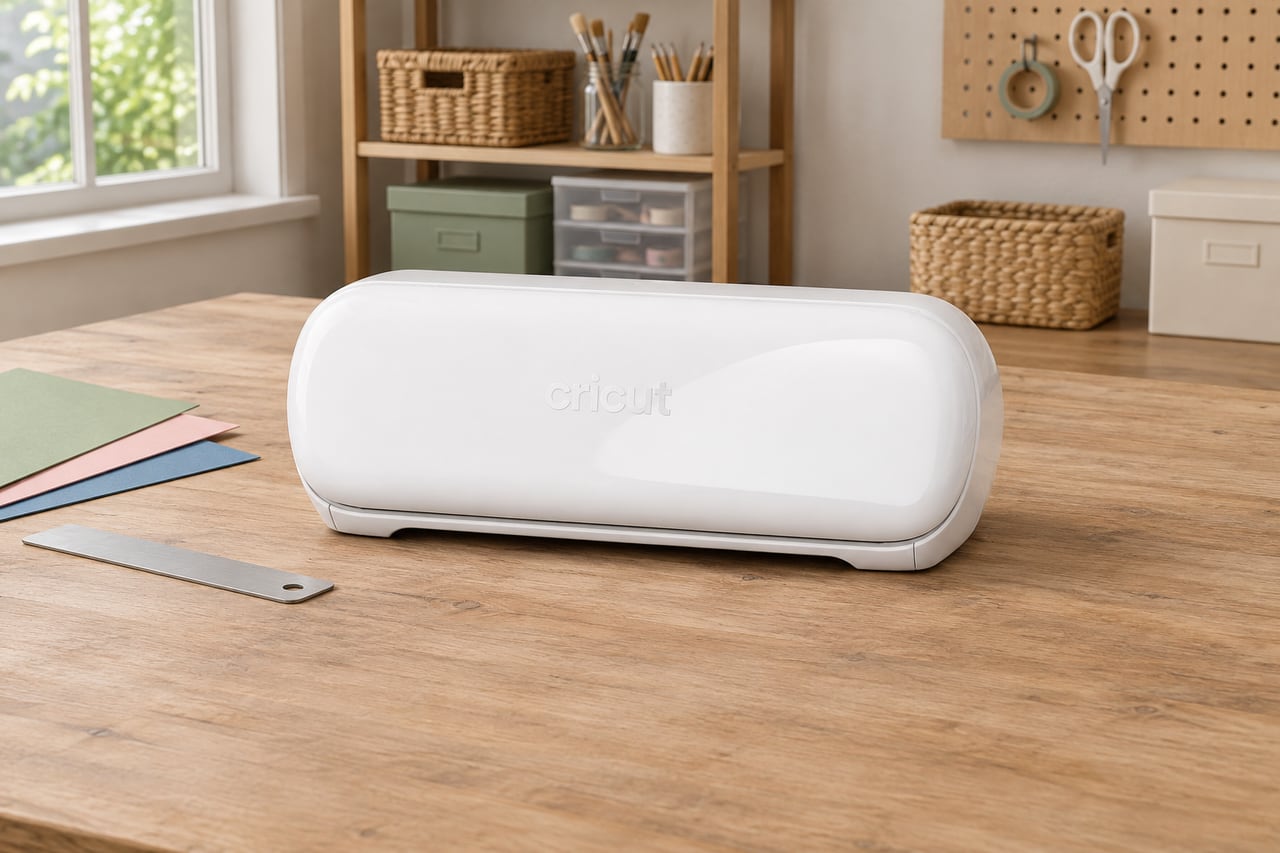
For a cutting machine, make a separate working-space plan. Its closed body, mat cut area and material feed route describe three different limits.
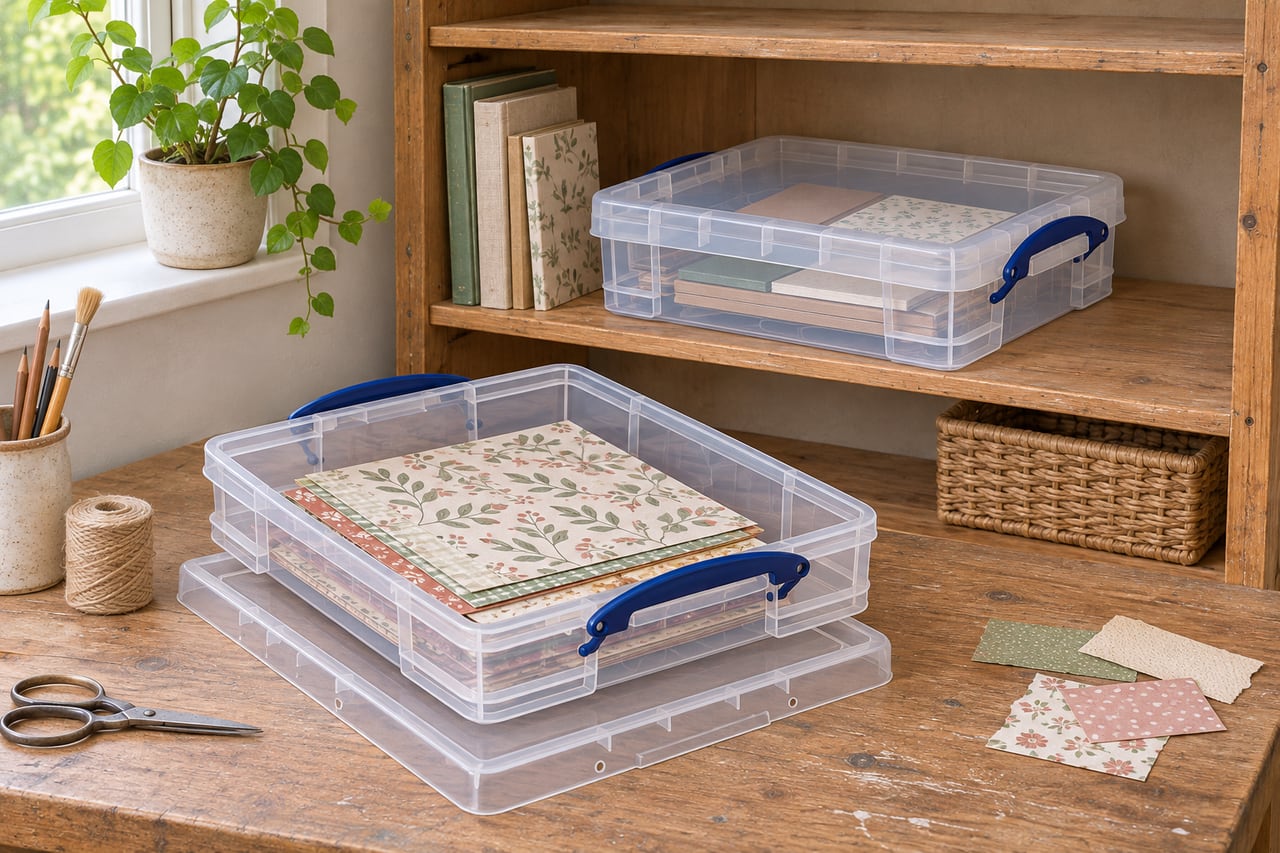
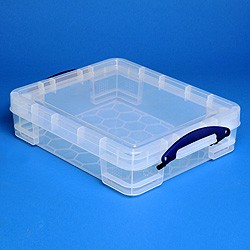
The IRIS medium case is the shortest of these flat cases at 3.1 inches high. The Really Useful 7 litre is slightly taller, while the ArtBin standard Super Satchel adds a carrying handle and a 3.5-inch overall height. Compare the full footprint before choosing: a box sold for twelve-inch paper can need more than fifteen inches in one direction.
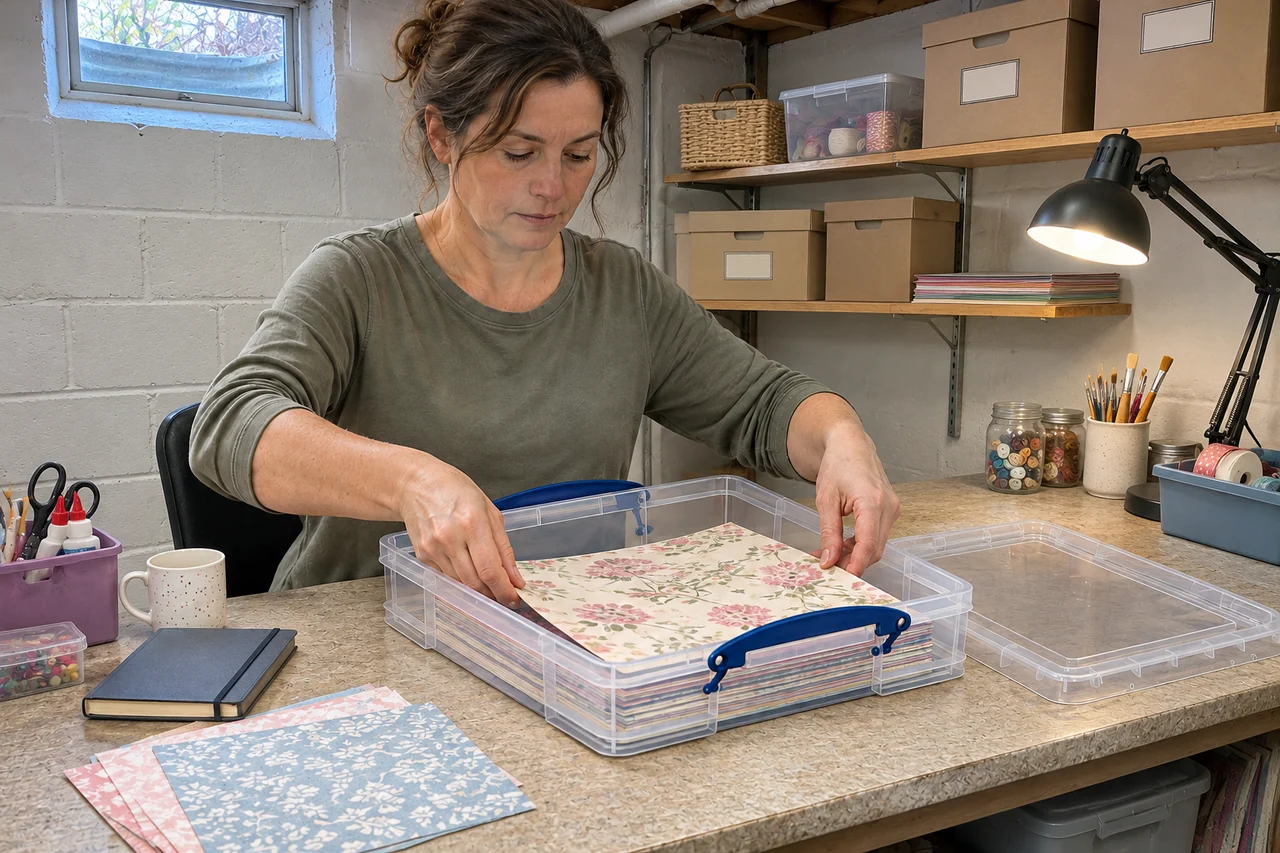
For loose twelve-inch sheets, all five products are presented by their manufacturers as scrapbook-paper storage. Sleeves, divider tabs and pad bindings change the question. Measure the widest complete item rather than the sheet printed inside it. An open compartment is useful when papers and folders need to lie together.
Use a clear opening of thirty inches wide and sixteen inches deep for this example. Each box stays upright with its lid on top. The table uses a simple row, choosing the orientation that gives the larger count. These counts leave no reserved handling gap; subtract your chosen allowance before repeating the calculation for a real shelf.
Joy 2 is the smallest body here, but its long-mat cut width is only 4.25 inches in Cricut’s quick-start guide. That makes a real difference for a wide card front or a single large decal. Joy Xtra gives 8.25 inches of mat cutting width; Portrait 4 lists 8.5 inches. These are ordinary mat cutting areas; printed registration marks can reduce the area available for print-and-cut projects.